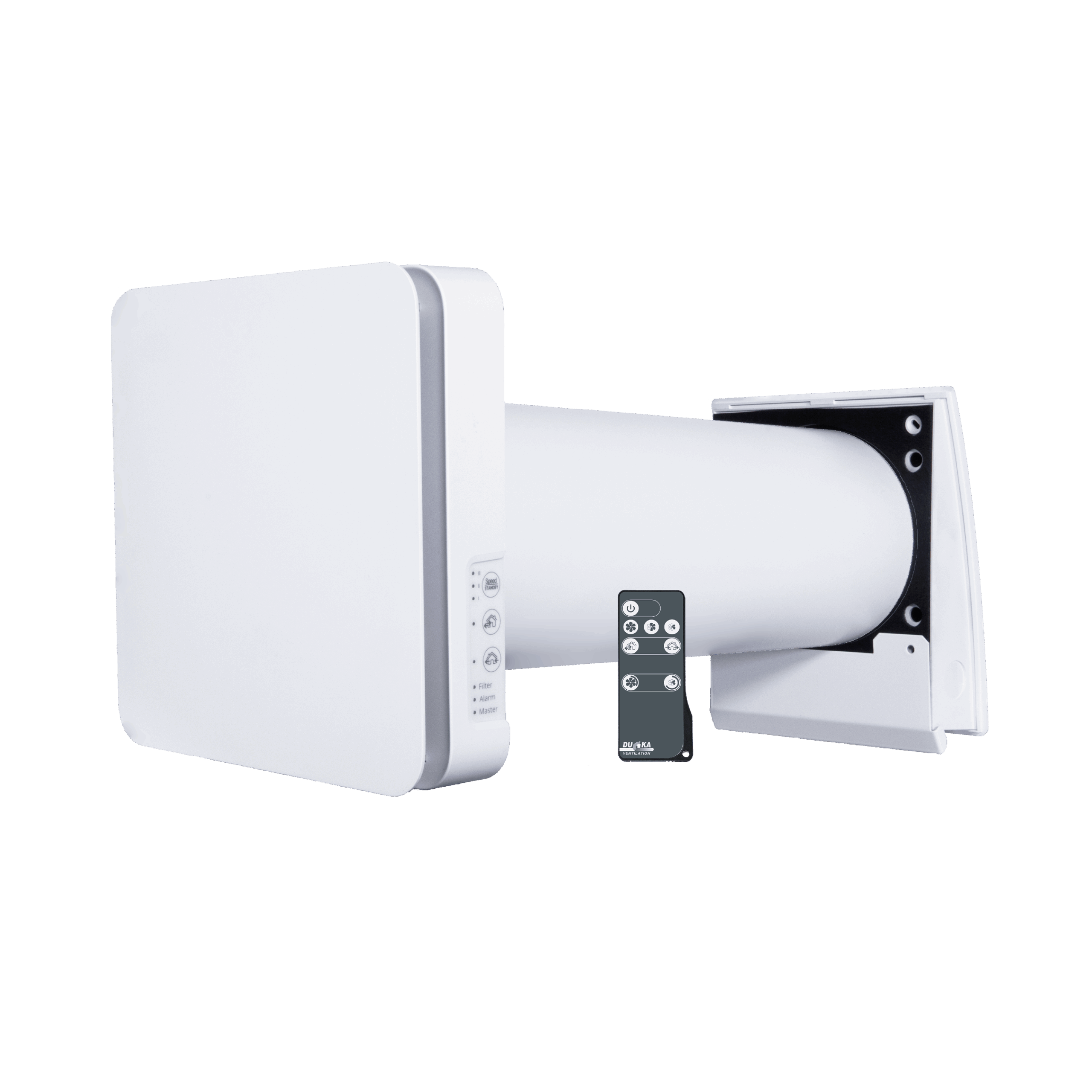
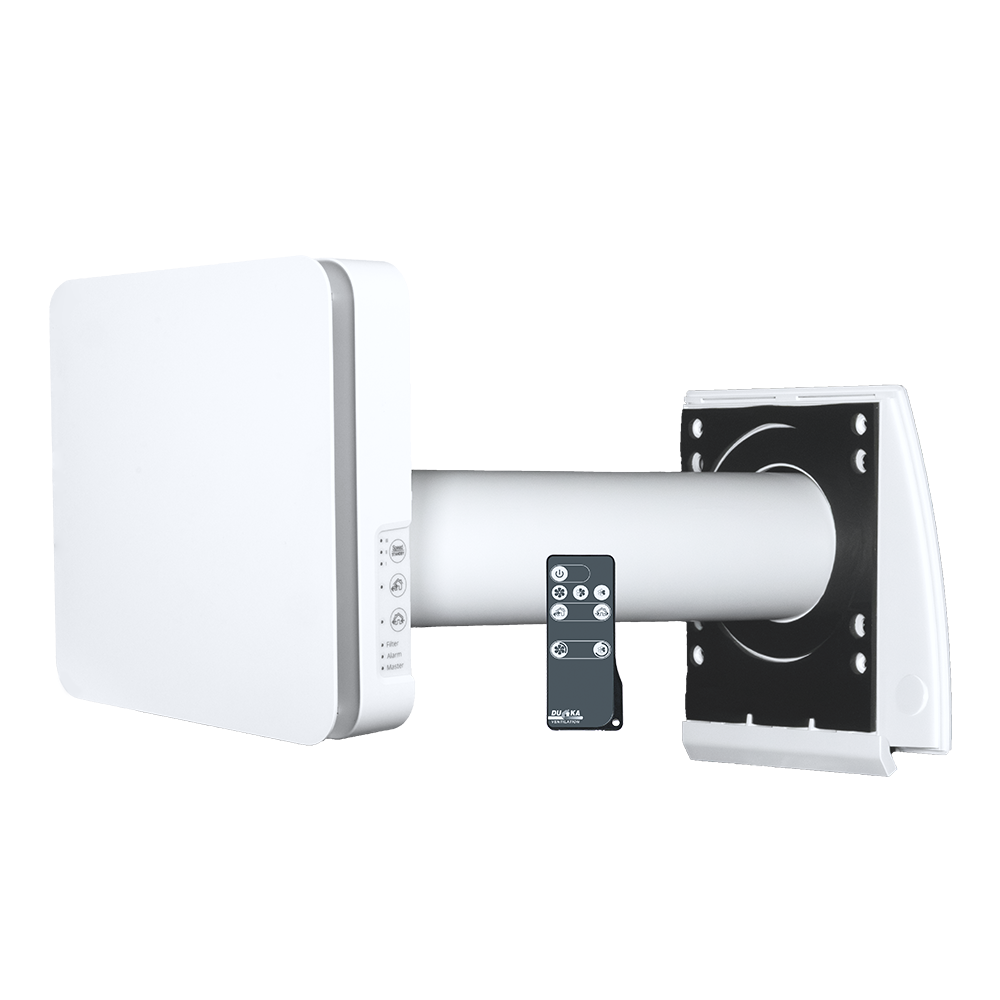
Installation guide  exhaust ventilation in the bathroom
  utility room, toilet
  and wet room zones
Good ventilation is particularly important in bathrooms, utility rooms and toilets. More moisture often arises here than in the other rooms of the home, and without adequate ventilation, or with incorrect solutions, the moisture can spread to the rest of the home and lead to condensation, bad odours and, in the worst case, problems with mould.
But which extractor hood should you choose? Where can it be placed? And what requirements apply to the air volume?
Here we guide you through the most important things you need to be aware of.
When is it a wet room?
A rule of thumb: a room is a wet room if there is a floor drain
A wet room is a room subject to water exposure. Bathrooms are wet rooms, and utility rooms and toilets with floor drains are also considered wet rooms. A utility room or toilet without a floor drain is not normally considered a wet room, but if there is a tumble dryer or you dry clothes in the room, we recommend treating it as a wet room anyway.

Location of bathroom extractor fan
Standard bathroom extractor fans from DUKA may be placed in the green zone and on the ceiling
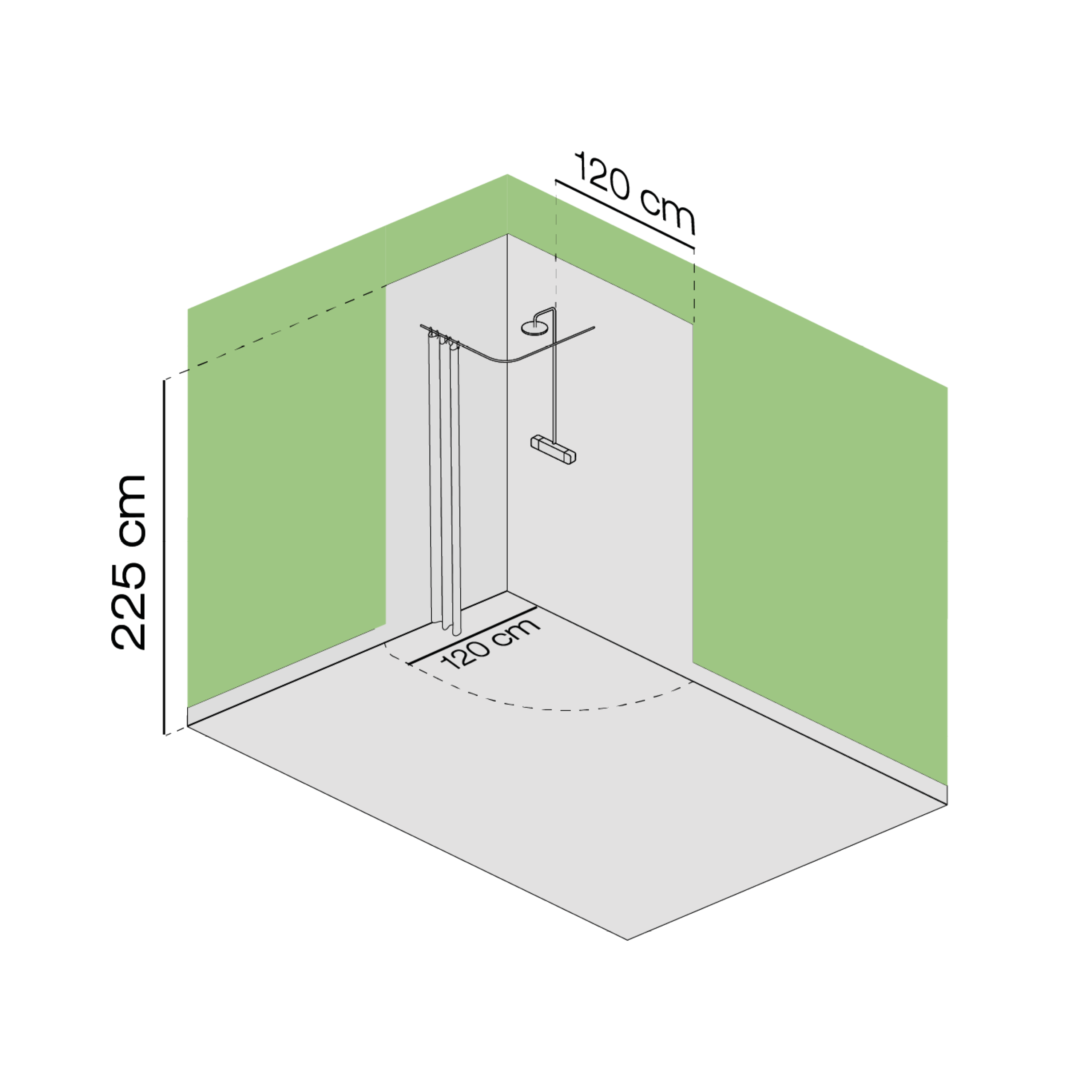
120 cm from water source
By a shower or bathtub, the distance to the fixed water outlet is important when determining the electrical zones.
As a general rule, a bathroom extractor fan may be placed freely as long as there is more than 120 cm to a vertical line above the fixed water outlet of the shower.
Fixed walls and, in certain cases, shower doors can affect the demarcation of the area. This means you cannot always simply measure 120 cm in a straight line and determine the placement based on that.
225 cm above the floor
An extractor fan may also be positioned freely if the lowest part of the fan is mounted at least 225 cm above the floor.
Loft
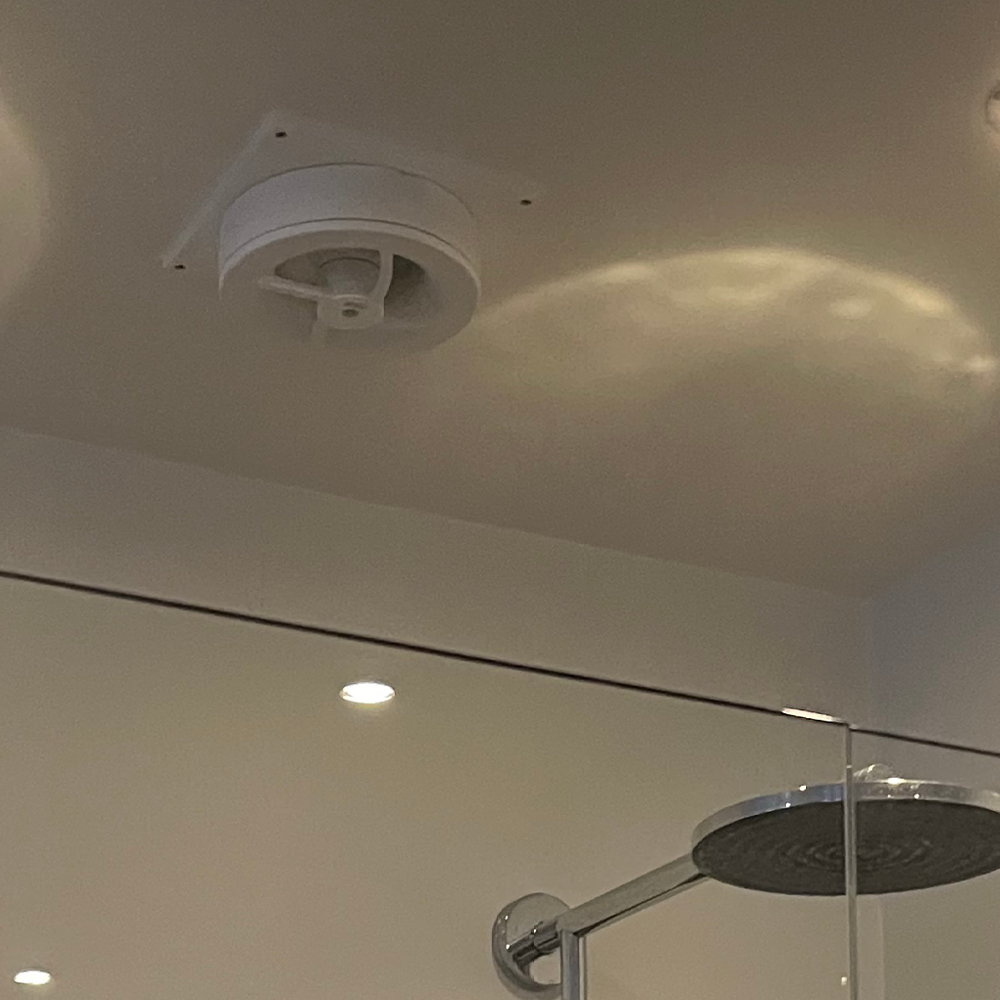
A bathroom fan can be freely placed on the ceiling of a bathroom. If the fan is equipped with a backdraught shutter, this must be removed for ceiling installation. Otherwise, condensation may form at the shutter, which can penetrate the fan and cause a short circuit or damage.
If the damper is not removed during ceiling installation, damage resulting from condensation is not covered by the warranty.
If you are in doubt about the zoning, the location should be assessed by an authorised electrical contractor.
Wet room regulations
Several factors come into play regarding building regulations, new builds, and the type of wet room.
With regard to ventilation, we choose to focus on 3 things:
Placement
All DUKA mechanical ventilation units must only be located in the damp zone, outside wet zones 0, 1 and 2. This means a minimum of 120 cm horizontally from the water source or more than 225 cm above the floor.
Standard bathroom extractor fans may also be placed in the ceiling.
Sizing
Correct sizing can be crucial for a successful indoor climate in a wet room. Too small a fan, and you don't have enough air exchange, and too big a fan, and you create unnecessary negative pressure and noise.
High capacity can be good for quickly changing the air after taking a shower, while low capacity can be optimal if the fan runs on trickle ventilation or for longer periods at a time.
Under our DUKA Select range you can find a guide to the recommended sizing of standard bathroom extractors.
Overpressure in wet rooms
An important rule regarding wet rooms is that you must not push moisture from the wet room into other dry rooms. If you have a two-way fan in a wet room, it is therefore very important that it only extracts air when the humidity rises above a certain level. This complies with DUKA One S6B and DUKA One Pro 25 S.
Placement of DUKA One in wet rooms
DUKA One bathroom models may be placed in the green zone.
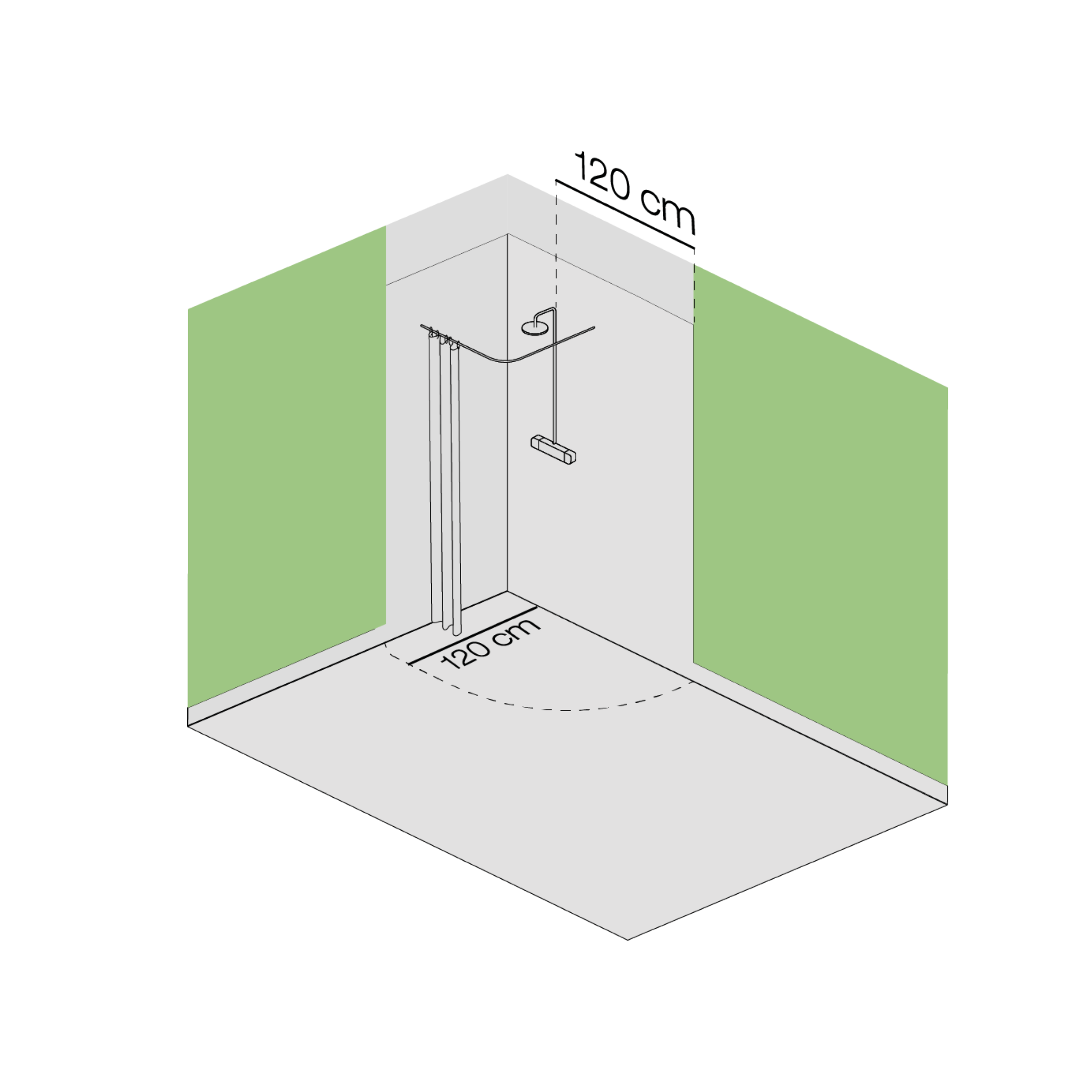
Where can a DUKA One for wet rooms be placed?
DUKA One S6B and DUKA One Pro 25 B are developed specifically for bathrooms, utility rooms and toilets, and may be positioned freely when they are located more than 120 cm from a vertical line above the shower's fixed water outlet.
They work differently from standard DUKA One units because, under high moisture loads, they can switch to forced pure extraction. This ensures that the moisture is led out of the room instead of being transported further into other parts of the home.
But even though the models are designed for wet rooms, they must not to be installed in or above zone 0, 1 or 2.
DUKA One must also be installed horizontally through an exterior wall. It must not be mounted on the ceiling, as condensation from the heat recovery must be able to drain correctly out through the unit.
DUKA One can be an option when:
- The unit can be placed in an external wall
- The location is more than 120 cm from a vertical line above the shower's fixed water outlet.
- There is sufficient wall thickness
- Correct fall can be established out through the wall
- The unit matches the required ventilation demand
If you are in doubt about the zoning, the location should be assessed by an authorised electrical contractor.
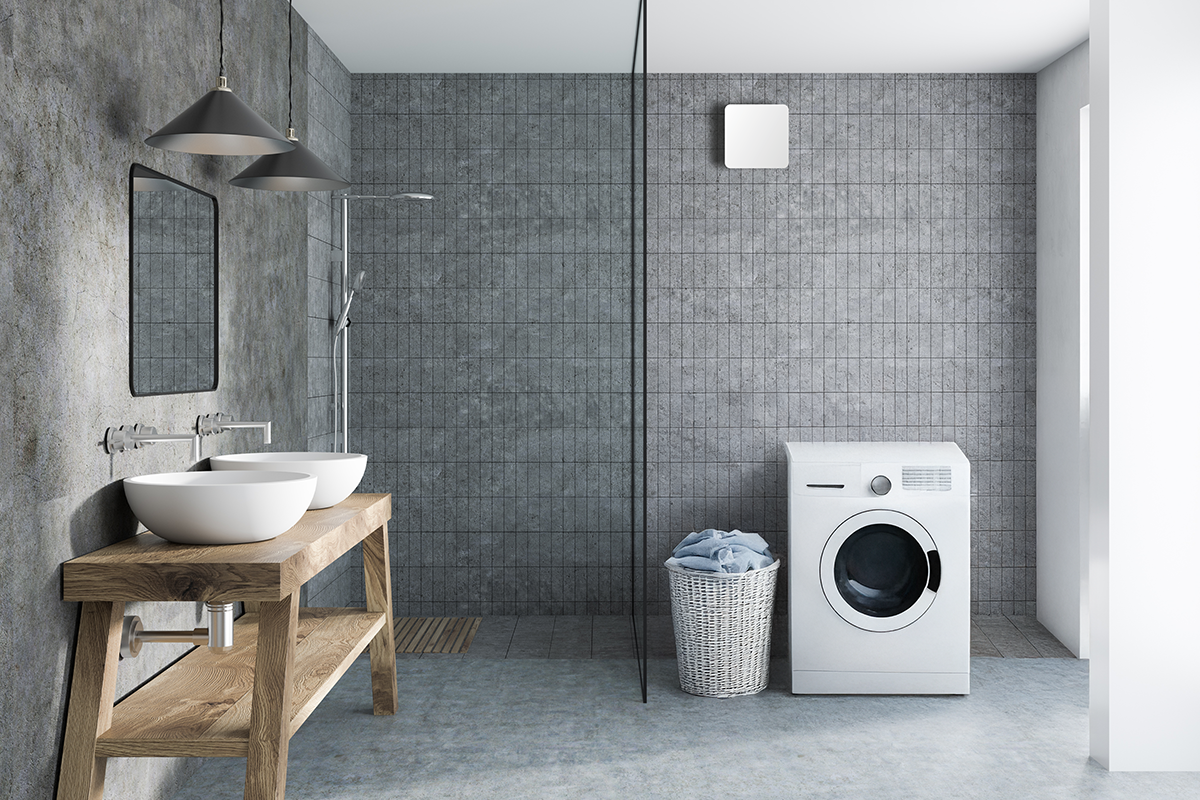
DUKA One S6B or Pro 25 B?
Both models are developed for wet rooms, but they have different sizes and capacities.
DUKA One S6B
- Ø160 mm
- Developed for bathrooms, utility rooms and toilets
- Forced extraction in the event of high humidity
- Up to 16.7 l/s in pure ventilation mode at the highest speed
DUKA One Pro 25 B
- Ø100 mm
- Developed for bathrooms, utility rooms and toilets
- Suitable for thinner walls
- Can among other things be used for upgrading existing Ø105 mm or 150 × 150 mm fresh air vents
- Up to 8.3 l/s in pure ventilation mode at the highest setting