


Create a healthy basement
Ventilation in the basement
Many basements have moisture problems as they are poorly insulated and moisture from the surrounding soil can penetrate through the walls. In addition, the laundry room is often located in the basement, which increases the moisture level in the basement. This can cause problems with mould, dampness, mildew, bad odours and radon in the basement.
One way to overcome the above is to ventilate the basement. By replacing the air in the basement, moisture and radon levels are reduced, minimising the risk of mould and mildew and eliminating the bad air.
Why is moisture in the basement a problem?
Moisture in the basement is more than just a nuisance - it can lead to mould, poor indoor climate and building damage. High humidity creates ideal conditions for mould and mildew, which can damage both health and property. In addition, moisture degrades materials such as wood and concrete, which can lead to expensive repairs in the long run. A damp basement also increases the risk of radon and can result in higher energy consumption.
A dry basement is healthier, more energy efficient - and far more durable.
A damp basement can cause bad odours
Radon build-up can have long-term health effects
Stagnant humid air can cause mould that can lead to health problems and damage to homes
Create a healthy indoor climate in your basement
One-room ventilation solution
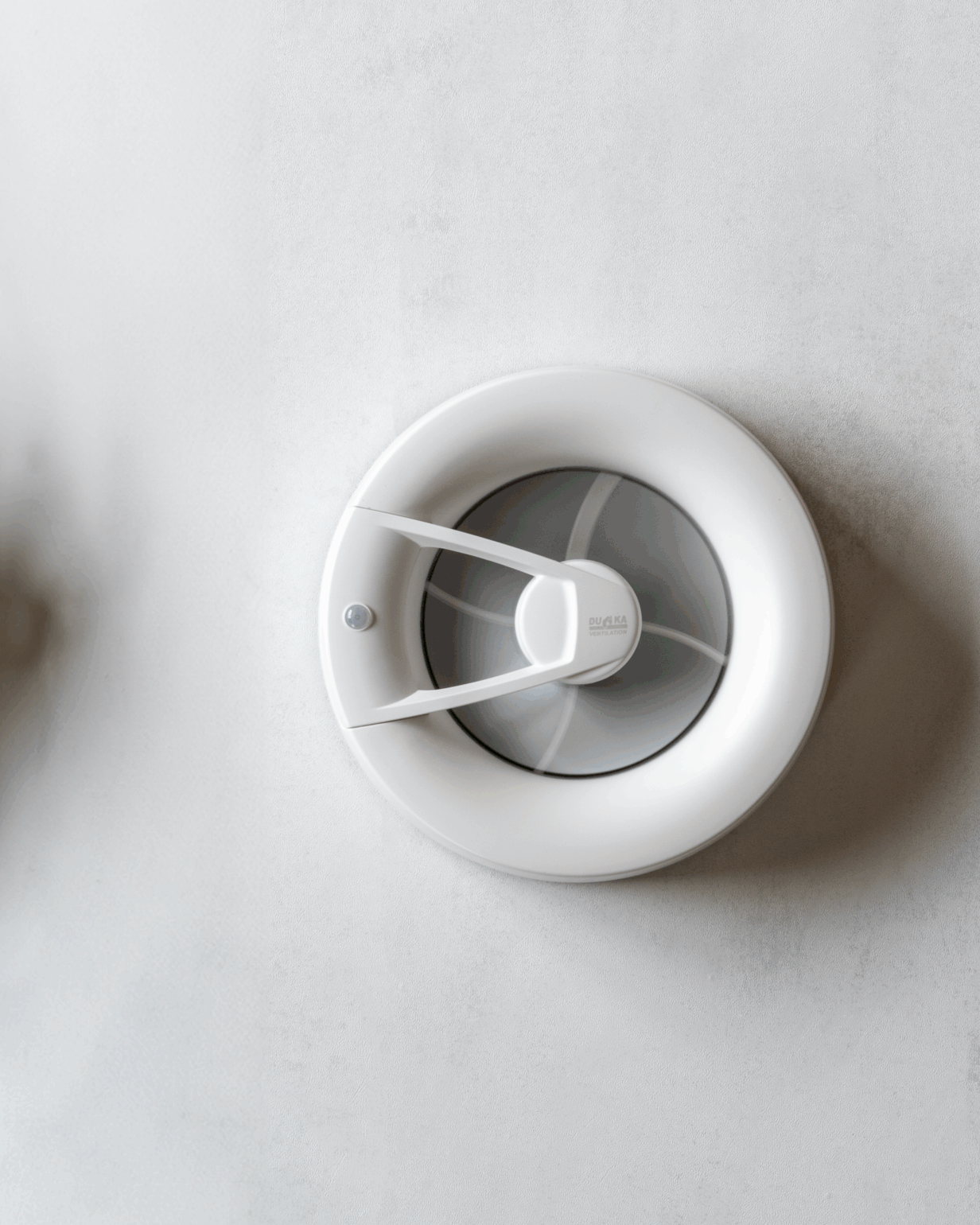
An obvious choice for creating a good indoor climate in your basement is with DUKA One.
With a DUKA One solution, you can easily get ventilation in your basement without complicated pipework. DUKA One is installed in the outer wall and consists of: An indoor unit, a pipe with core and motor and an external storm shield. For 70 seconds, the solution sucks hot and used air from the room and stores the heat in the core. After 70 seconds, the motor reverses and the solution draws in fresh outdoor air through the core, where it is heated and blown into the room. With a DUKA One solution, ventilation needs can easily be customised to the individual room.
This minimises heat loss when the heat from the exhaust air is reused to heat the supply air. With DUKA One, you get a home with fresh air around the clock, where the occurrence of moisture and radon is reduced.
Other ventilation solutions for basements
Exhaust fan
One way to get rid of moisture is with a fan. A fan is a one-way device that only sucks moisture and air out of the room. Therefore, a fan also requires an air supply to the room, which can be via a window vent, grille in the door or via a keyhole.
Read more about the different types of fans here.
Villa Ventilation with heat recovery
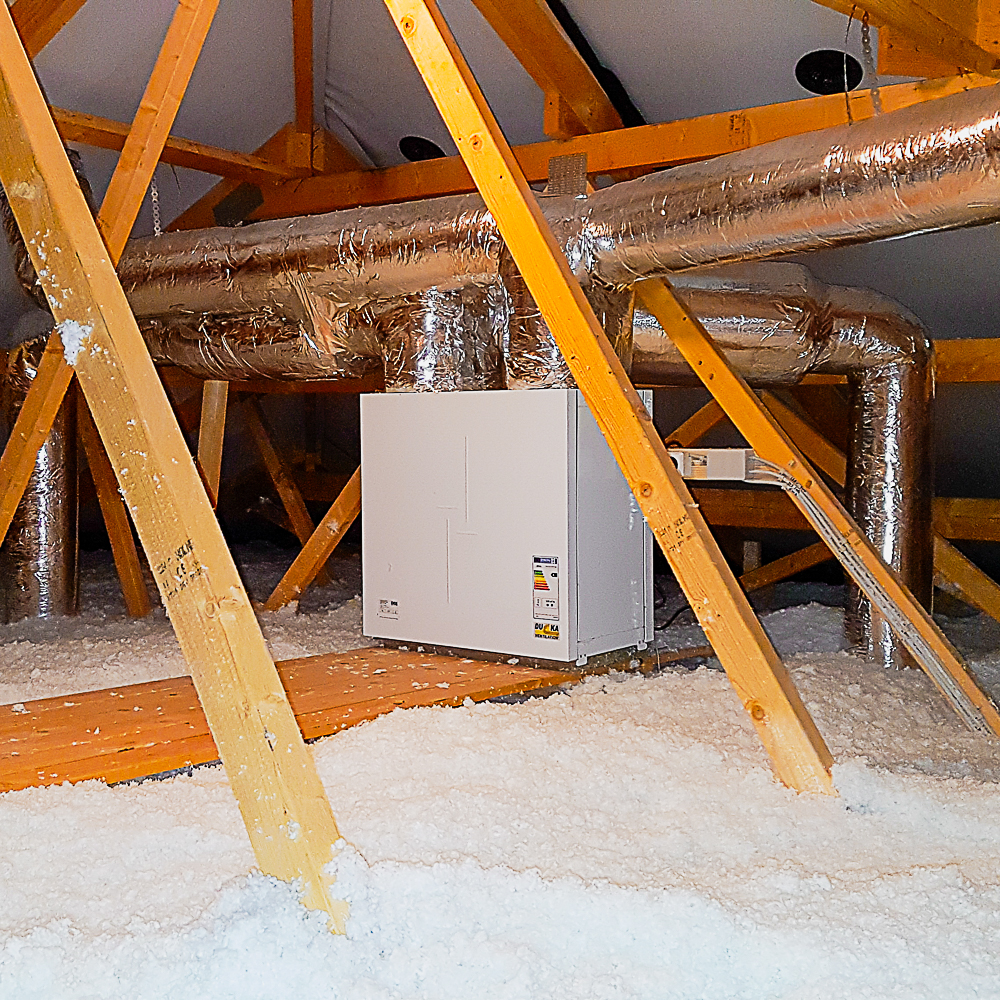
With a 1TP1 Tilation solution, air will be extracted from the home's humid rooms, such as the bathroom, toilet, kitchen and utility room, and air will be blown into other rooms in the home. The heat from the exhaust air is recycled in the unit's exchanger and heats the supply air. The constant extraction removes moisture from the bathroom. The unit can optionally be equipped with a humidity sensor, where the unit will speed up when the set humidity limit is exceeded.
This solution will ensure a home with fresh, well-ventilated air in every room of the home.
Natural ventilation
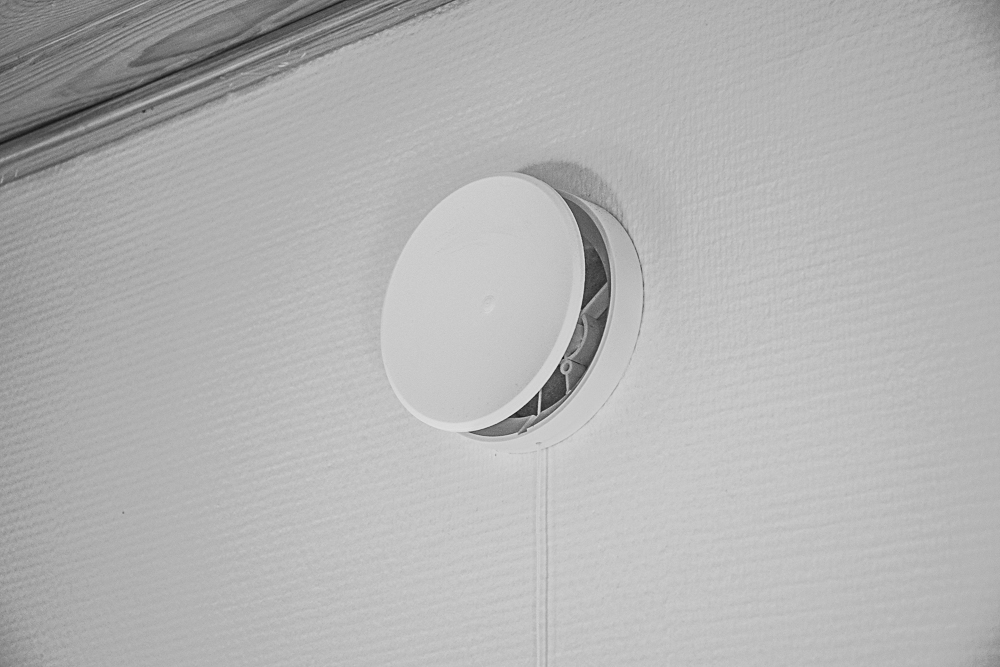
Natural ventilation can be achieved by opening windows and doors, via vents and leaks that may exist in the home.
A valve ventilates the room via the natural buoyancy of warm air, where the air is led out of the room either via a flap valve or a telescopic valve.
With natural ventilation, the heat that is in the exhaust air is not utilised. This can result in high heat loss.