The teenage room
Do you know the situation?
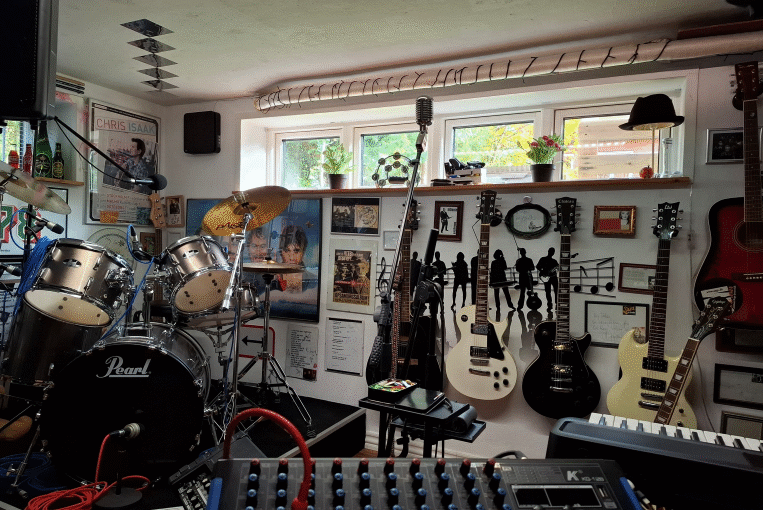
Teenagers love to live a secluded life behind closed doors. PCs, tablets and phones are on full blast, keeping them connected to friends, girlfriends.
The doors are almost always closed so there are no disturbances from the adults. That's how it should be and there's nothing abnormal about it.
But unfortunately, there is a dark side. Poor ventilation, exposure to dust from furniture and electronics create an unhealthy environment.
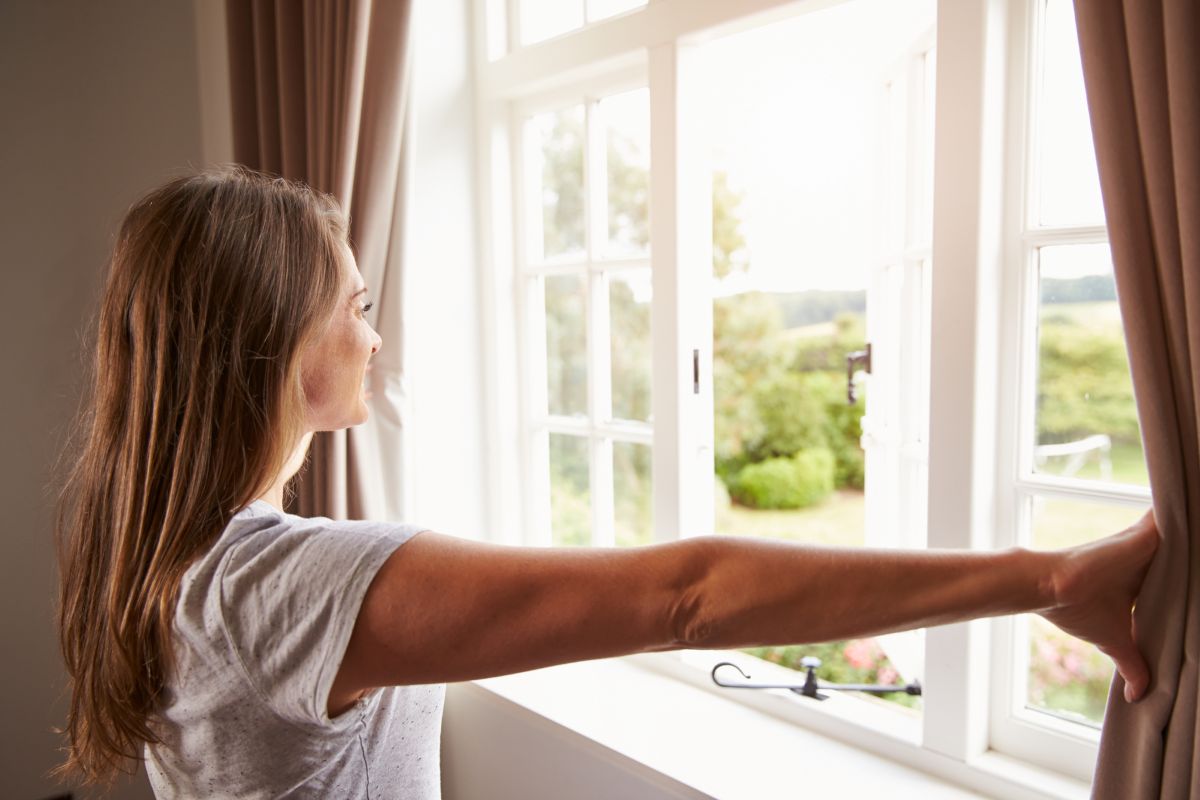
It is therefore important to ventilate properly!
When young people close the door to their room, the CO2 level can rise to up to 5000 ppm. The labour inspectorate recommends that CO2 levels do not exceed 1000 ppm. CO2 levels rise when the air in a room is not replaced either by mixing with air from other rooms in the home or fresh air supplied via either natural or mechanical ventilation.
In addition to the CO2 level, the humidity level rises at the same time, as a person emits around two litres of liquid per day. This moisture increases the risk of mould growth. If an old lunch box or a plate of leftovers is left in the room and the damp, dirty socks are lying in a pile of clothes, dust collects and the room is damp, they can end up becoming small mould spreaders.


How is indoor climate defined based on PPM level?
- At a PPM level of less than 1,000, the indoor climate is characterised as good.
- At a PPM level between 1,000 - 2,000, the indoor climate is labelled as poor.
- At a PPM level above 2,000, the indoor climate is labelled as very poor.
Tips for a good indoor climate in the teenage room
- Ventilate several times a day to keep young people happy and healthy. Make sure there is a draught to make it effective - alternatively invest in a mechanical ventilation solution.
- Keep the door to the room open when the room is not in use - alternatively, invest in a mechanical ventilation solution.
- Buy some plants for the youth room and the air will be purified.
- Cleaning, please vacuum carpets regularly. Avoid carpets at all costs, but cleaning is not avoided.
- Switch off electronics at night. The side benefit is a better night's sleep.
- Clothes should be placed in a cupboard or chest of drawers, or in the laundry basket.
- If they want to paint the room, go for a Nordic Swan Ecolabelled paint that contains as few toxic substances as possible and make sure there is good ventilation after painting.
- Plastic prints on clothes, shoes and bags can contain endocrine disruptors, so make sure they are washed first or leave them outside to degas.
- Ditch the candles, even though they are cosy they emit many harmful particles. Scented candles and candles with stickers are particularly toxic.
Sources: Realdania and Bolius
INDOOR CLIMATE IMPROVEMENT
Consider investing in a ventilation solution
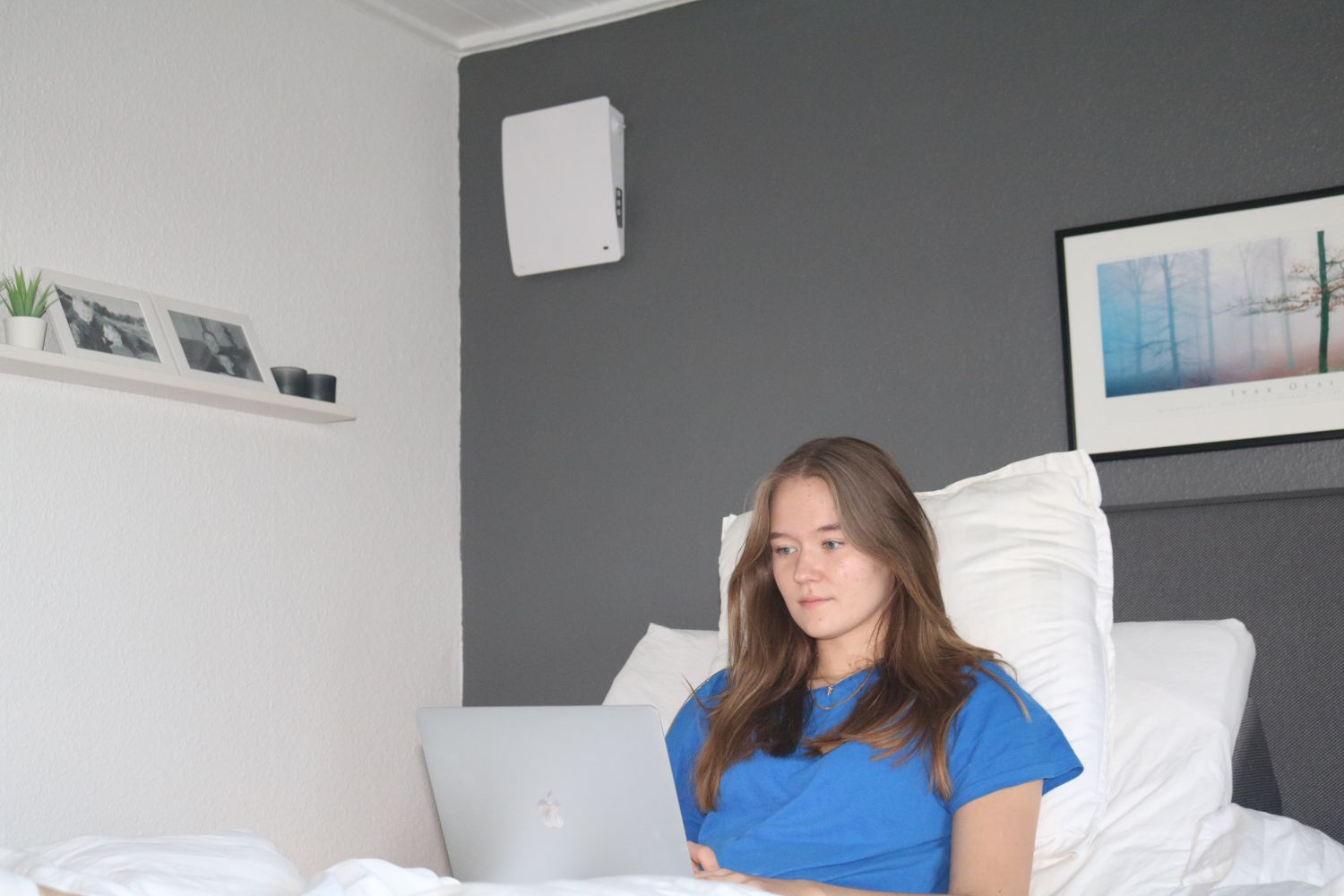
To get rid of particles and moisture in your home, a ventilation system can be the solution. DUKA One is a ventilation solution that ventilates the room 24 hours a day. For 70 seconds, the system sucks out stale and moist air, storing heat in the unit's ceramic core. After 70 seconds, the system's motor reverses and blows in fresh air, which is heated by the ceramic core. This constantly changes the air, ventilating away particles and moisture and saving on heating bills as the heat in the home is recycled. DUKA One is mounted directly in the outer wall and can be installed wherever there is a need for ventilation.
You can find more information about the different models here.
In sleeping and living areas, we recommend the DUKA One S6 Plus / S6 Plus Wi-Fi as they are our quietest models and they direct the supply air upwards, minimising drafts. Read more about S6 Plus here and S6 Plus Wi-Fi.